What does moderating a panel discussion entail?
When should panel members be contacted?
Who can you contact regarding technical coordination?
How early should you arrive prior to your presentation?
Where is the forum that you are moderating?
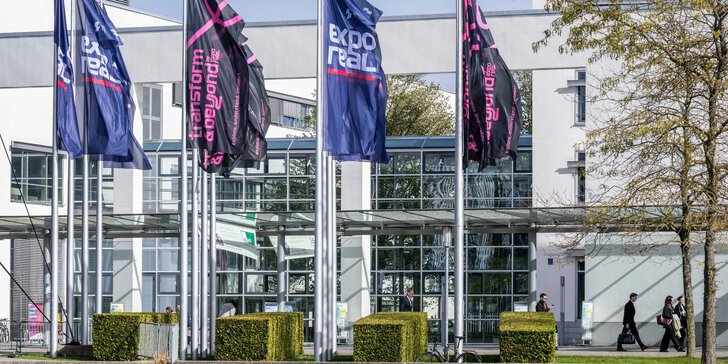
How do you get to the trade-fair centre?
How do you get your admission ticket?
When should you book a hotel room?
What should appear on the invoice?
When should you send us your invoice?
What does moderating a panel discussion entail?
PREPARATION
The
first step is to research the topic. This first step is particularly
important if the topic is limited or focuses on recent events and/or
specific aspects with which the moderator may not be familiar. Research
sources may include your own archives as well as reports in other
media. Talking with industry representatives and colleagues or even the
organizer may also prove helpful.
The result is a list of key words that include the most important content and possible questions.
The
second step is to organize a list of key words – at first for
yourself – and to draft a "script" for the panel discussion.
Content should be assigned to three categories: Content for the
introduction, questions that the moderator can ask the panel members,
and content that you want to save for the final round.
The result is a panel-discussion "script" that has been planned by the moderator and can be sent to the panel members.
CONTACT WITH PANEL MEMBERS
You can contact the members of
your panel by telephone and/or by e-mail. You may also want to meet
with them prior to your event. The main reason for contacting them in
this way is to get to know them. Even if you have already met,
contacting the panel members ahead of time is the polite thing to do.
Furthermore, it gives each participant a way to contact the moderator,
and vice-versa.
The next step is to discuss the sequence of events, taking organizational and content-oriented aspects into consideration.
Organizational
aspects include the timeframe, structure, language and length of each
presentation, the (possible) use of charts and other organizational
specifics for which the organizer is responsible. A possible structure
might be to introduce the topic and the panel members, followed by
brief statements, a question-and-answer period, an open discussion and
a final round.
For the moderator, content-related aspects imply
a responsibility to contribute information and a responsibility to
elicit it. The responsibility to contribute information includes
examining the personal ideas that have been so far, especially the
questions, and the responsibility to elicit information refers to the
panel members' feedback regarding those ideas. It is also important to
take the panel members' special interests and expertise into account.
That, in turn, means answering two key questions: Who wants to and is
able to contribute something special to which aspects? And what ideas
can the panel members contribute themselves? You may also want to ask
yourself what information that the panel members can provide is
unwanted in the discussion. Finally, be sure to check the panel
members' job titles and the names of their companies. A good panel
discussion is well-balanced. If people's areas of expertise overlap, it
helps to be aware of that fact ahead of time.
The result is a
script of the event that the moderator has discussed with all
participants and, if necessary, modified accordingly. The panel members
have recognized the moderator's responsibility. The moderator can send
the results to all participants, just to be safe.
PRIOR TO YOUR EVENT
The moderator should be present
before the first panel members arrive. Depending on what the
participants agree, you may want to arrive at least a half-hour prior
to the beginning of your event. Your travel arrangements –
including the possibility of flight or train delays, heavy traffic,
finding a place to park, etc. – should be planned accordingly.
Arriving
early also gives the moderator a "feel" for the room and a chance to
"soak up" the atmosphere. Both will help you to adapt to the room, to
those present and to the number of panel members. What is the
atmosphere? What kind of mood are the panel members in? It also gives
you time for coordinating any last-minute corrections with the
organizer. After all, it may still be necessary to include any special
requests or information that the organizer may have. Another important
thing to check: If questions from the audience are permitted, hopefully
the organizer has had microphones set up in the audience. It may seem
trivial, but it could be important, especially in the case of lengthy
panel discussions. If you arrive early, you have plenty of time to
"inspect" the facilities one last time and make sure everything has
been taken care of. Finally, make sure that all panel members have
switched off their telephones or at least set them to "mute".
Naturally, that applies to the moderator, as well.
In a best-case scenario, the result will be a stress-free beginning to your event, at least from an organizational standpoint.
MODERATING YOUR EVENT
You may find it helpful to use a
checklist of the most important points to be covered. If your panel is
large, having the members' business cards or names in front of you in
the order in which they are sitting or standing is also helpful.
When
introducing the panel, the moderator should state the correct name, job
title and company for each panel member. If you need to glance at the
business card, you should do so as inconspicuously as possible. If a
moderator introduces himself, he should do so last to be polite. An
important point to remember when introducing your panel (and something
many people forget): The audience sees your panel the other way around.
For the audience, "to Mr. X's right …" is actually "to Mr. X's
left".
Nobody in a panel discussion is the main speaker, least
of all the moderator. Although the moderator can and should introduce
the topic. However, after that his most important function is to use
questions to guide the event in the right direction. The important
thing here is to maintain a balance between the planned structure and
what is actually happening on stage. Interrupting an exciting debate to
stay "on schedule" may be just as wrong as giving the panel members too
much leeway. There is no standard solution. The most important things
on stage are instinct and a good sense of timing. However, most people
would agree that it is important to break off long explanations
politely and use follow-up questions to motivate people who give short
answers. Also, be sure to use transitions. You can repeat a key
statement that one panel member makes and then ask another panel
member's opinion. Or you can focus on a specific aspect and then turn
things over to another panel member by asking a question. In both
cases, having paper and pencil handy for jotting down names and brief
notes may also be helpful. The role of the moderator is comparable to
that of a composer who leads an orchestra. The notes you make are like
the notes on the score. A journalist who moderates a panel discussion
understands that what he is doing is like a live version of a feature
article in front of an audience. Only the mean of communication is
different: This "article" is not written, it is spokenv.
Always be
sure to keep an eye on the mood on stage and in the audience. On stage
it is important to recognize when people are signalling that they have
something to say – your slip of paper can he helpful here, as
well; If there is a debate between two panel members, the moderator can
also choose to withdraw for a moment. But afterwards he must return
some structure to the discussion. If we return to the image of the
composer: Allowing room for improvisation like they do in free jazz,
for example, can make for a lively performance. But the moderator is
and must remain the composer.
The audience's attention is your
gauge for measuring the quality of the discussion. Deciding whether to
go into detail about one aspect or change the subject depends entirely
on them. Deciding when to allow questions from the audience –
provided the organizer wants to – is also important. The
moderator's decision to open the discussion to questions is always
subjective: It should neither be too early nor too late. Experience has
shown that approximately one-third of the overall discussion period
should be reserved for questions. However, it is also important for the
moderator to have some questions "up his sleeve" in case nobody in the
audience asks to speak. If someone does ask to speak, remember to ask
for his or her name and company.
If an audience member who poses
the question does not address a specific panel member directly, it is
up to the moderator to decide who might want to answer or to direct the
question to a panel member himself. If the question is for the entire
panel, you must decide the sequence in which the panel members will
respond. Experience has shown that it is best to begin with an outgoing
panel member. Just remember to keep one eye on the panel and the other
on the audience. Some panel members actually prefer to "add something
later", and once the ice is broken, the audience may have some more
questions, too.
As the end of the panel discussion draws near, the
moderator must keep an eye on the time as inconspicuously as possible.
You can keep your wristwatch hidden behind your name plaque, or you can
glance at one of the other participants' watches. You should only look
at your watch on your arm if you have no other choice. No later than 5
minutes before the end of the discussion, you should announce a final
round during which all panel members will answer a key question. After
that, the moderator should thank the panel for participating and thank
the audience for their attention. Try to come up with something that
does not sound like a standard statement. You can definitely mention
things like the nice atmosphere or how smoothly things ran. But the
last thing you say should always be thank you.
The result: if
the audience applauds, then the audience is also expressing its thanks.
At this point the moderator and the organizer are relieved of their
stress.
When should panel members be contacted?
The moderator should contact the panel members to discuss the sequence of events at least four weeks prior to the fair.
Who can you contact regarding technical coordination?
Our
partner for technical coordination is EUROKONGRESS GmbH, a capable
partner with experience organizing and hosting national and
international congresses and conferences. EUROKONGRESS is in charge of
all organizational and technical coordination for the forums being held
in conjunction with EXPO REAL 2008.
EUROKONGRESS GmbH
Schleissheimer Str. 2
80333 München
Tel. +49 (0)89 210 98 6-0
Fax. +49 (0)89 210 98 6-988
How early should you arrive prior to your presentation?
We
kind request that all moderators and panel-discussion members meet in
the speakers' room for preparation/coordination purposes no later than
30 minutes prior to the beginning of their event.
Where is the forum that you are moderating?
EXPO REAL FORUM in Hall A1
The
EXPO REAL FORUM offers extended insights into the latest trends and
themes of the Real Estate industry. Renowned industry experts talk
about investment and financial strategies, but also about corporate
governance and politics. Since the first EXPO REAL ten years ago, this
forum is considered to be the most important information exchange in
the commercial Real Estate industry.
INVESTMENT & LOCATIONS FORUM in Hall A1
In
the INVESTMENT LOCATIONS FORUM, worldwide investment locations are
dealt with. International and domestic market participants analyse the
hot spots of the Real Estate industry and discuss the emerging markets
for the industry. Along with established European countries, the
booming markets in central and south-east Europe as well as those
overseas will be discussed here.
SPECIAL REAL ESTATE FORUM in Hall B3
The
SPECIAL REAL ESTATE FORUM looks at property from the view of the
occupier. Experts from the hotel, office, retail trade and logistics
industry sectors discuss their projects, present their unique slant on
the market and introduce discussions. An expert insight into the latest
trends and successes of the movers and shakers.
PLANNING & PARTNERSHIPS FORUM in Hall C3
Users,
architects and town planners often have different demands. At the
PLANNING & PARTNERSHIPS FORUM, reality and visions from town
planning, architecture and facility management are put forward and
implemented. The career day rounds off the programme.
How do you get to the trade-fair centre?
The
New Munich Trade Fair Centre is located just 8 kilometres east of
downtown Munich (at the site of the old Munich-Riem airport) and is
quick, easy and convenient to reach by car and public transportation.
It offers quick access to destinations in all directions, e.g. via
motorway A94 to the city and via the motorway ring to international
motorways and the airport.
Public transport:
You may use public transport services
(buses, trains, etc.) provided by MVV free of charge from the day
before to the day after the fair against presentation of an exhibitor
pass. Visitors can also use public transport free of charge on all
three days of the fair against presentation of a valid admission ticket.
Underground
The U2 line travels directly to the New Munich Trade Fair Centre. Disembark at "Messestadt West".
Shuttle bus
During
EXPO REAL, shuttle-bus service is available between the airport and the
New Munich Trade Fair Centre. Busses depart ever 30 minutes and travel
non-stop.
"S-Bahn" airport trains:
There are two ways to get to EXPO
REAL. Take the S1 to "Feldmoching" and transfer to the U2, which goes
directly to the trade-fair centre. Or take the S8 to "Ostbahnhof,"
transfer and take the U5 to "Innsbrucker Ring", then transfer again and
take U2 directly to the trade-fair centre.
By car:
Follow the signs posted throughout the Munich
area. Ample parking is available. Direct access to the A94 motorway
(Passau – Munich) via "München-Riem" and "Feldkirchen-West"
exits.
How do you get your admission ticket?
If
you are a journalist, you can have yourself accredited online prior to
the fair or by presenting your press ID at the Press Centre West, were
you will receive your press pass.
If you are not a journalist, we will send you your personalized visitor pass by mail as of late September.
The visitor pass entitles you to admission on all three days of the fair.
When should you book a hotel room?
As you plan for this year's fair, please remember to book your flights and hotel room(s) early. Additional information is available here or at the following link http://www.hrs.de (in German).
What should appear on the invoice?
Your invoice should include the following information:
Recipient
Messe München GmbH
EXPO REAL 2008
Abt. Finanzen
Messegelände
81823 München
Germany
Sender
Personal particulars (First name, last name, address)
Forum/day/time/date
Amount
Bank particulars (IBAN-Nr and SWIFT Code)
NEW:
Order No
Tax number
VAT, provided your obligated to charge VAT
When should you send us your invoice?
Please send us your invoice for your services as moderator by mail after the end of the fair.